Thyroidectomy: A Safe and Effective Treatment for Thyroid Disorders
The thyroid gland is a small, butterfly-shaped gland located at the front of the neck, but it plays a major role in maintaining the body’s metabolism, energy levels, temperature, heart rate, and many other essential functions. When the thyroid develops a significant disorder—such as a large goiter, suspicious thyroid nodules, uncontrolled hyperthyroidism, or thyroid cancer—surgery may sometimes be recommended.
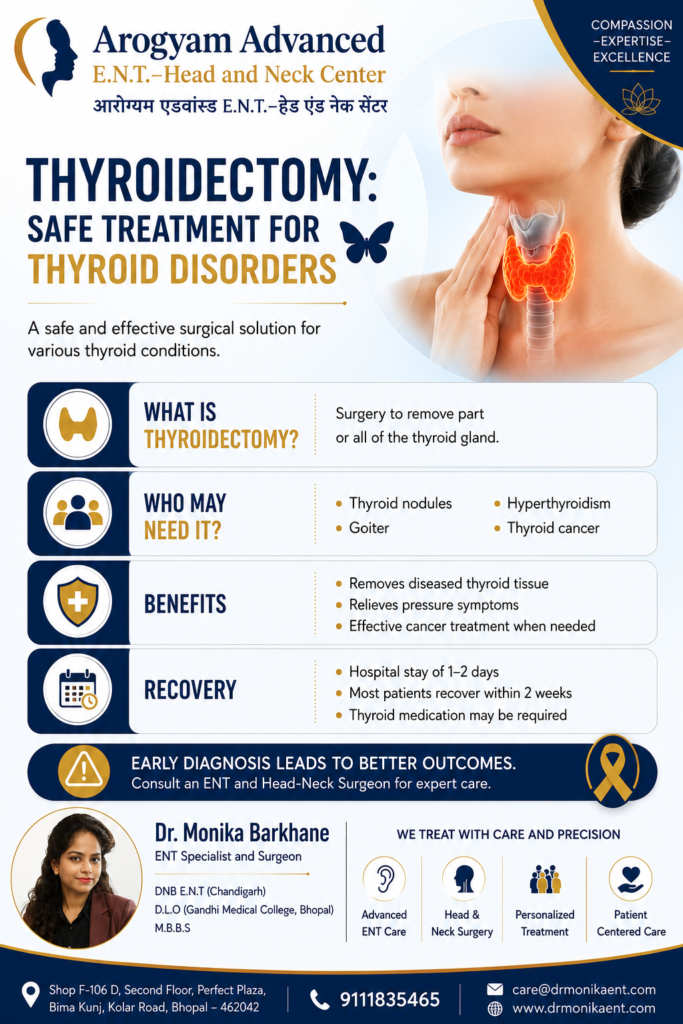
Thyroidectomy is an operation in which part or all of the thyroid gland is removed. It is a commonly performed head-and-neck surgery and, when appropriately indicated and performed by an experienced surgical team, can provide effective treatment with good outcomes.
What Is Thyroidectomy?
Thyroidectomy refers to surgical removal of thyroid tissue.
Depending on the underlying condition, the surgeon may perform:
Hemithyroidectomy/Lobectomy: Removal of one thyroid lobe.
Total thyroidectomy: Removal of almost the entire thyroid gland.
Near-total thyroidectomy: Removal of most of the gland, leaving a very small amount of thyroid tissue.
The choice of surgery depends on factors such as the diagnosis, size and characteristics of thyroid nodules, thyroid function, ultrasound findings, biopsy results, and whether cancer is suspected or confirmed.
Who May Need Thyroidectomy?
Not every thyroid disorder requires surgery. Many thyroid conditions can be managed with observation, medication, or other treatments. Surgery is considered when there is a clear medical indication.
1. Thyroid Nodules
Thyroid nodules are very common and most are benign. However, certain nodules may appear suspicious on ultrasound or may show concerning features on fine-needle aspiration cytology (FNAC).
Surgery may be recommended when a nodule is confirmed or strongly suspected to be cancerous, or when it causes significant symptoms.
2. Goiter
A goiter is an enlargement of the thyroid gland. A large goiter may cause pressure in the neck and lead to difficulty swallowing, breathing discomfort, a sensation of tightness, or cosmetic concerns.
When a goiter becomes large, symptomatic, or extends behind the breastbone, thyroidectomy may be considered.
3. Hyperthyroidism
Some patients with an overactive thyroid gland may require surgery, particularly when other treatment options are unsuitable, ineffective, or when there is a large goiter or suspicious nodule.
4. Thyroid Cancer
Thyroidectomy is an important part of treatment for many thyroid cancers. Depending on the type, size, and extent of the cancer, the surgeon may remove one lobe or the entire thyroid gland. Additional treatment may be recommended depending on the individual case.
What Happens Before Surgery?
A careful evaluation is essential before thyroidectomy. Your doctor may recommend:
Clinical examination of the neck
Thyroid function tests
Ultrasound of the thyroid and neck
FNAC of a suspicious thyroid nodule
Additional imaging when required
Assessment of vocal cord function in selected patients
Routine pre-operative investigations and anesthesia evaluation
The exact investigations depend on the patient’s condition and the planned procedure.
Important Structures During Thyroid Surgery
The thyroid lies close to several delicate structures.
The recurrent laryngeal nerves are important for movement of the vocal cords. Careful identification and preservation of these nerves is an important part of thyroid surgery.
The parathyroid glands help regulate calcium levels in the body. Preserving their blood supply and function is another key objective during thyroidectomy.
Because of this close anatomical relationship, thyroid surgery requires detailed knowledge of neck anatomy and meticulous surgical technique.
What Are the Benefits of Thyroidectomy?
When appropriately indicated, thyroidectomy can:
Remove cancerous or suspicious thyroid tissue
Relieve pressure caused by a large goiter
Improve swallowing or breathing symptoms caused by thyroid enlargement
Treat selected cases of hyperthyroidism
Prevent progression of certain thyroid conditions
Provide definitive treatment for appropriately selected thyroid disorders
The expected benefit depends on the underlying diagnosis and the extent of disease.
Is Thyroidectomy Safe?
Thyroidectomy is generally considered a safe and well-established surgical procedure. However, as with any operation, it carries potential risks.
Possible complications include:
Bleeding or neck hematoma
Infection, although uncommon
Temporary or, rarely, permanent voice changes due to nerve injury
Low calcium levels if parathyroid function is affected
Scar formation
Need for thyroid hormone replacement after surgery
The risk varies according to the type and extent of surgery, the underlying disease, and individual patient factors.
Patients should discuss the expected benefits and potential risks with their surgeon before making a decision.
Recovery After Thyroidectomy
Most patients recover well following thyroid surgery. Depending on the procedure and individual circumstances, hospital observation may be required for a short period.
Mild neck discomfort, tightness, or swelling can occur during the early recovery period. Patients are usually advised to keep the surgical wound clean and follow their surgeon’s instructions regarding activity, diet, medications, and follow-up.
Many patients can gradually return to their routine activities within a few weeks, although the exact recovery period varies.
Will Thyroid Medication Be Required?
After total thyroidectomy, the body can no longer produce sufficient thyroid hormone naturally. Therefore, lifelong thyroid hormone replacement medication is usually required.
After a hemithyroidectomy, the remaining thyroid tissue may produce enough hormone, but some patients may still require medication depending on thyroid function tests.
Regular follow-up and blood tests help determine the appropriate thyroid hormone dose.
When Should You Consult an ENT or Head-Neck Surgeon?
You should seek medical evaluation if you notice:
A lump or swelling in the neck
A thyroid nodule that is increasing in size
Difficulty swallowing
Breathing difficulty or pressure in the neck
Persistent hoarseness or voice change
Symptoms of an overactive or underactive thyroid
A thyroid nodule with suspicious imaging or biopsy findings
Early evaluation helps determine whether observation, medication, further investigation, or surgery is appropriate.
The Take-Home Message
A thyroid problem does not automatically mean that surgery is required. The decision to perform thyroidectomy depends on the individual patient’s diagnosis, symptoms, investigations, and risk factors.
When surgery is indicated, thyroidectomy can provide effective and definitive treatment for several thyroid disorders, including selected thyroid nodules, large goiters, hyperthyroidism, and thyroid cancer.
Early diagnosis, appropriate investigation, and timely treatment can lead to better outcomes.
If you have a thyroid swelling, thyroid nodule, or persistent neck symptoms, consult an ENT and Head-Neck surgeon or an appropriate thyroid specialist for a detailed evaluation and individualized treatment plan.
This article is intended for general patient awareness and does not replace a medical consultation. The need for thyroidectomy and the type of surgery should always be decided after individual clinical evaluation.