Cochlear Implant: Restoring the Gift of Hearing 🔊
Hearing plays an important role in communication, learning, social interaction, and overall quality of life. When a person has severe to profound hearing loss and receives little or no meaningful benefit from hearing aids, a cochlear implant may offer an effective option for restoring access to sound.
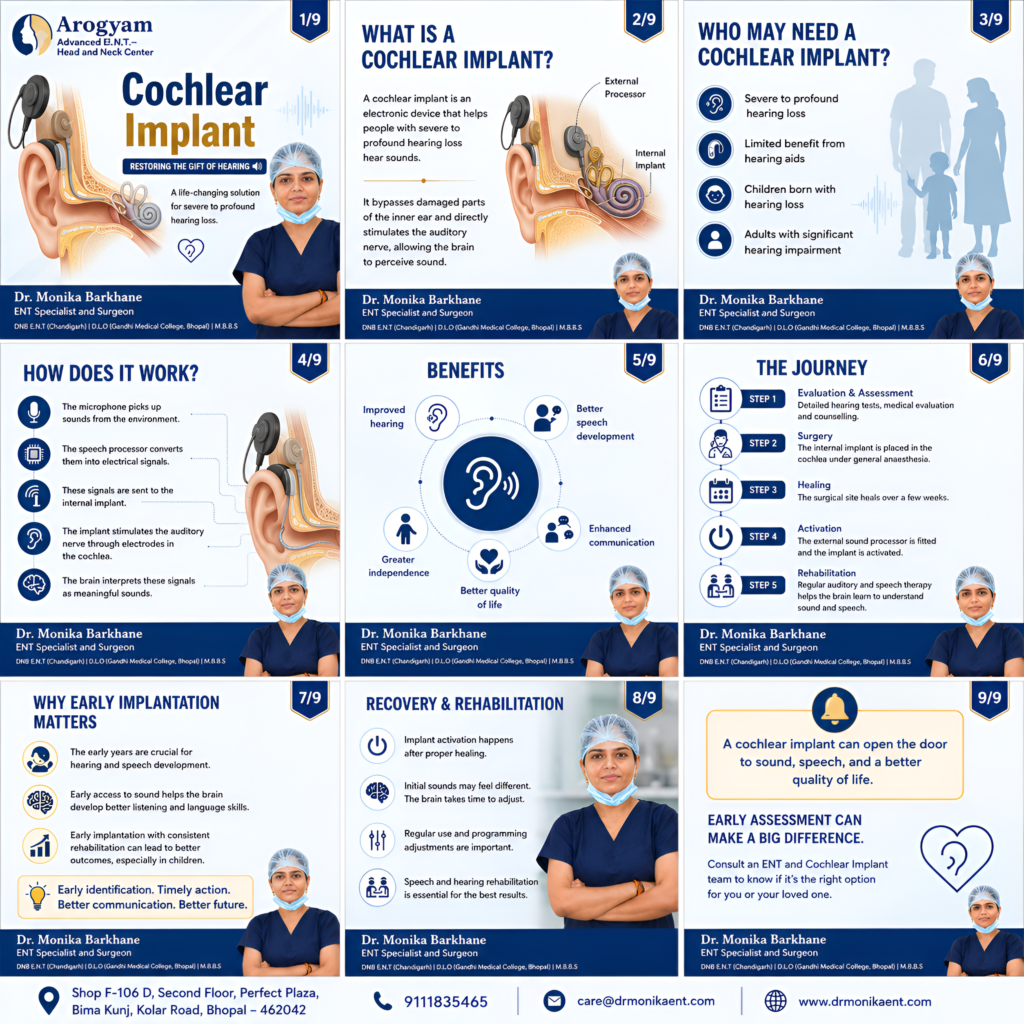
A cochlear implant does not simply make sounds louder like a hearing aid. Instead, it is an electronic hearing device that bypasses damaged portions of the inner ear and directly stimulates the auditory nerve, allowing the brain to perceive sound.
What Is a Cochlear Implant?
A cochlear implant is an electronic medical device designed for people with severe to profound sensorineural hearing loss who obtain limited benefit from appropriately fitted hearing aids.
The implant has two main components:
External component: A microphone, speech processor, and transmitter worn outside the body.
Internal component: A receiver-stimulator placed beneath the skin and an electrode array positioned inside the cochlea.
The microphone picks up sounds from the environment. The speech processor converts these sounds into specially coded electrical signals. These signals are transmitted to the internal implant, which stimulates the auditory nerve through electrodes placed within the cochlea.
The auditory nerve then carries this information to the brain, where it is interpreted as sound.
Who May Benefit From a Cochlear Implant?
Cochlear implantation may be considered for children and adults with significant hearing impairment when conventional hearing aids do not provide sufficient access to speech and environmental sounds.
Potential candidates may include:
People with severe to profound sensorineural hearing loss
Individuals who receive limited benefit from appropriately fitted hearing aids
Children born with significant hearing loss
Children who develop severe hearing loss during early childhood
Adults who have developed significant hearing impairment later in life
Individuals who have difficulty understanding speech despite adequate hearing-aid use
Cochlear implant candidacy is not determined by hearing level alone. A comprehensive assessment is necessary to understand whether implantation is likely to provide meaningful benefit.
Why Early Intervention Matters
Early identification and treatment of significant hearing loss are particularly important in children.
The early years of life are a critical period for the development of the auditory pathways and language skills. When a child has limited access to sound for a prolonged period, speech and language development may be affected.
For appropriately selected children, early cochlear implantation followed by consistent auditory and speech-language rehabilitation can support better development of listening and communication skills.
This is why newborn hearing screening, timely diagnosis, hearing-aid trials when appropriate, and early referral to a cochlear implant team are so important.
Early intervention does not guarantee a particular outcome, but it can provide the developing auditory system with earlier access to meaningful sound.
What Are the Benefits of a Cochlear Implant?
The benefits vary from person to person and depend on several factors, including age at implantation, duration of hearing loss, underlying cause of hearing loss, previous hearing experience, overall health, and participation in rehabilitation.
Potential benefits include:
1. Improved Access to Sound
A cochlear implant can provide access to sounds that may not be sufficiently audible or understandable with hearing aids.
2. Better Speech Understanding
Many appropriately selected implant users experience improved ability to recognize and understand speech, particularly with continued use and rehabilitation.
3. Speech and Language Development
In children, early access to sound combined with appropriate rehabilitation can support the development of listening, speech, and language skills.
4. Improved Communication
Better access to speech may make communication with family members, teachers, colleagues, and friends easier.
5. Greater Independence
Improved auditory awareness can help individuals participate more confidently in everyday activities and social situations.
6. Improved Quality of Life
For many recipients, improved communication and greater participation in daily activities can contribute positively to overall quality of life.
What Happens Before Cochlear Implant Surgery?
Cochlear implantation requires careful evaluation by a multidisciplinary team. The assessment may include:
Detailed medical and hearing history
Hearing tests
Hearing-aid evaluation
Speech perception testing
Imaging such as CT or MRI when indicated
Assessment of the cochlea and auditory nerve
Speech and language assessment, particularly in children
Medical and anaesthetic evaluation
Discussion with the patient and family regarding expectations and rehabilitation
The purpose of this assessment is to determine whether cochlear implantation is appropriate and to develop an individualized treatment plan.
How Is Cochlear Implant Surgery Performed?
Cochlear implant surgery is generally performed under general anaesthesia.
During the procedure, the surgeon creates access to the middle and inner ear and carefully places the electrode array into the cochlea. The internal receiver-stimulator is secured beneath the skin.
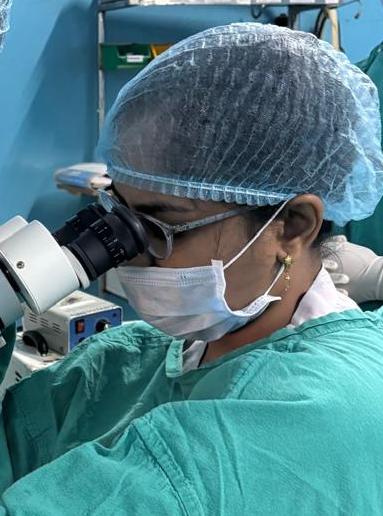
The procedure is performed using microsurgical techniques, with the goal of preserving the delicate structures of the inner ear whenever possible.
After surgery, the patient is monitored during the recovery period. The external processor is not usually activated immediately after surgery, because the surgical site requires time to heal.
What Happens After Surgery?
Surgery is only one part of the cochlear implant journey.
After adequate healing, the external sound processor is fitted and the implant is activated. This is often an exciting but unfamiliar experience for the recipient because the brain has to learn to interpret the electrical signals produced by the implant.
The initial sound may not immediately resemble natural hearing. With regular device use, programming adjustments, and rehabilitation, the brain gradually learns to interpret the new auditory information.
Why Is Rehabilitation Important?
Cochlear implantation is not simply a surgical procedure—it is a process of auditory learning.
Regular auditory and speech-language rehabilitation is particularly important for children and for individuals who have had little previous auditory experience.
Rehabilitation may focus on:
Detecting sounds
Identifying environmental sounds
Recognizing speech
Understanding spoken language
Developing listening skills
Supporting speech and language development in children
Consistent use of the implant and active participation in rehabilitation can significantly influence the benefits achieved.
Is a Cochlear Implant Suitable for Everyone?
No. Cochlear implants are not suitable for every person with hearing loss.
The decision depends on hearing thresholds, speech perception, hearing-aid benefit, anatomy of the cochlea and auditory nerve, age, duration and cause of hearing loss, and other individual factors.
A detailed evaluation by an ENT surgeon and cochlear implant team is therefore essential before making a decision.
It is also important to have realistic expectations. A cochlear implant can provide access to sound, but the quality and usefulness of hearing vary between individuals. Outcomes may improve progressively over time with appropriate device programming and rehabilitation.
Frequently Asked Questions
Does a cochlear implant restore normal hearing?
A cochlear implant does not recreate normal biological hearing. It provides an alternative way of delivering auditory information to the brain. Many recipients, however, achieve substantial improvement in hearing and communication.
Can children receive cochlear implants?
Yes. Appropriately selected children, including those born with significant hearing loss, may benefit from cochlear implantation. Early diagnosis, candidacy assessment, implantation when appropriate, and rehabilitation are particularly important.
Is cochlear implant surgery painful?
The procedure is performed under anaesthesia, so the patient does not experience pain during surgery. Some discomfort, swelling, or tenderness may occur during the postoperative recovery period and can generally be managed with medication prescribed by the treating doctor.
How long does it take to benefit from an implant?
There is no single timeline. Some individuals notice useful sounds soon after activation, while understanding speech and developing listening skills may take weeks, months, or longer. Regular use and rehabilitation are important.
Take-Home Message
A cochlear implant can be a life-changing option for appropriately selected people with severe to profound hearing loss who receive inadequate benefit from hearing aids.
The journey involves much more than surgery. Early diagnosis, careful patient selection, appropriate implantation, timely activation, regular device use, and dedicated auditory rehabilitation all play important roles in achieving the best possible outcome.
If you or your child has severe hearing loss and hearing aids are providing limited benefit, consult an experienced ENT and cochlear implant team for a comprehensive evaluation. Early assessment can help determine the most appropriate hearing rehabilitation pathway.
Disclaimer : This blog is for educational purposes only and does not replace professional medical advice. Always consult a qualified healthcare provider for diagnosis and treatment.