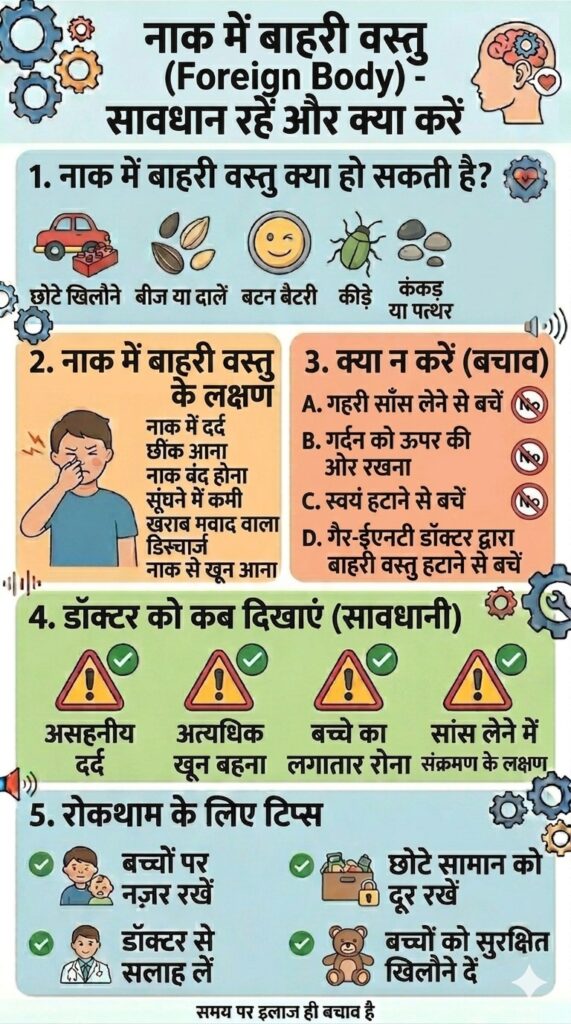
Foreign Body in the Nose: A Common ENT Emergency Every Parent Should Know About
Young children are naturally curious. They love to explore objects by touching, tasting, and sometimes putting them into their nose or ears. One of the most common emergencies seen in an ENT clinic is a foreign body in the nose, especially in children between 2 and 6 years of age.
A foreign body means any object that gets stuck inside the nasal passage. While it may seem like a small issue, it can cause significant discomfort and may lead to infection or breathing problems if not removed properly.
What Objects Commonly Get Stuck in the Nose?
Children often insert small household items into their nostrils, such as:
Beads
Seeds and pulses (peas, beans, corn)
Paper pieces
Eraser bits
Crayons
Small toy parts
Cotton
Pebbles
Button batteries
Magnets
Among these, button batteries are particularly dangerous because they can cause severe burns and tissue damage within a few hours.
Symptoms of a Foreign Body in the Nose
Sometimes parents see the child placing something in the nose. In other cases, the object may go unnoticed until symptoms develop.
Common signs include:
Blockage of one nostril
Foul-smelling nasal discharge from one side
Blood-stained discharge
Nose pain or irritation
Frequent sneezing
Difficulty breathing through the affected nostril
Bad breath
Restlessness in small children
If the discharge is persistent and only from one nostril, a foreign body should always be suspected.
Why It Should Not Be Ignored
If left untreated, a nasal foreign body can lead to:
Infection and pus formation
Swelling of the nasal lining
Nosebleeds
Formation of a hard mass (rhinolith)
Aspiration into the airway
Damage to the nasal septum
Button batteries and paired magnets can cause rapid tissue destruction and require immediate emergency treatment.
What Parents Should Do
If you suspect your child has inserted something into the nose:
Stay calm and reassure the child.
Do not probe with tweezers, pins, or cotton buds.
Prevent the child from sniffing forcefully.
Seek prompt evaluation by an ENT specialist.
In some cases, if the child is cooperative and the object is clearly visible, a doctor may advise a simple positive-pressure technique. However, this should only be done under professional guidance.
What You Should Not Do
Avoid the following common mistakes:
Do not insert fingers or instruments into the nose.
Do not repeatedly ask the child to blow hard.
Do not use oil, water, or nasal drops to “flush” the object out.
Do not delay medical attention.
Improper attempts often push the object deeper and make removal more difficult.
Prevention Tips for Parents
Prevention is the best treatment.
Keep small objects out of reach of young children.
Avoid giving toddlers tiny toys without supervision.
Store button batteries securely.
Teach older siblings not to place small objects near infants.
Supervise children during play.
When to Seek Emergency Help Immediately
Go to the nearest ENT specialist or emergency center if:
The object is a button battery or magnet
The child has difficulty breathing
There is severe nosebleeding
The child is in significant pain
Expert ENT Care in Bhopal
If your child has a suspected foreign body in the nose, prompt and safe removal is important.