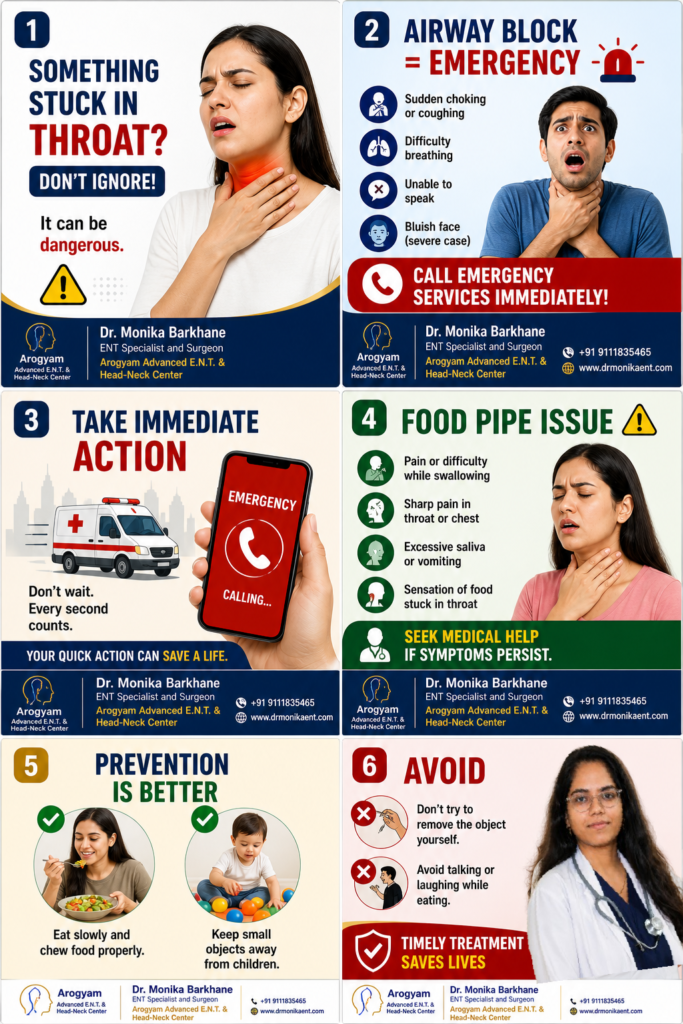
When a foreign object becomes lodged in the throat, the situation can escalate rapidly from a minor discomfort to a life-threatening medical emergency. Recognizing the difference between an airway blockage and an esophageal obstruction is vital, as the required responses for each differ significantly.hopkinsmedicine+2
Airway (Trachea) Blockage
An object lodged in the trachea creates an immediate threat to life by cutting off oxygen supply. You must act instantly if the person exhibits signs of severe distress, such as an inability to breathe, talk, or cough, or if they appear to be clutching their neck. In severe cases, the person’s face may turn bluish (cyanosis) due to a lack of oxygen.
If an adult is conscious but unable to breathe, perform the following first aid while someone else calls emergency services:
- Abdominal thrusts: If back blows fail, stand behind the person, wrap your arms around their waist, and perform the Heimlich maneuver. Place a clenched fist above the belly button and below the rib cage, then pull sharply inward and upward.
Repeat: Continue alternating between five back blows and five abdominal thrusts until the object is expelled or professional medical help arrives.
Food Pipe (Esophagus) Blockage
If an object is stuck in the esophagus, the primary symptom is typically acute dysphagia—difficulty swallowing. Unlike a trachea obstruction, the airway is usually still clear, but the person may experience intense discomfort, such as a sensation of a lump in the chest or throat, pain, or excessive drooling. You may also notice gagging, vomiting, or blood-stained saliva.
While this is not always an immediate respiratory emergency, it requires prompt medical attention. Do not attempt to force the object down with food or drink, as this can worsen the situation. If the person is experiencing persistent pain, difficulty breathing, or complete inability to swallow liquids or saliva, seek emergency care immediately to prevent complications like esophageal perforation.
Prevention and Caution
Taking proactive steps can significantly reduce the risk of accidental ingestion. Always eat slowly and ensure food is chewed thoroughly before swallowing. Avoid talking, laughing, or walking while eating, as these activities can cause food to be inhaled rather than swallowed. Furthermore, keep small objects—such as coins, magnets, or small toy parts—strictly away from children, as they are at a higher risk of accidental ingestion.
If someone has a foreign body in their throat, never attempt to “blind sweep” the throat with your fingers, as this may push the object deeper and cause further obstruction. Rely on professional medical intervention for safe removal, especially if the object is sharp or if a child has ingested a button battery, which constitutes a critical medical emergency. Timely recognition and appropriate action remain the most effective tools in managing these emergencies.
Disclaimer: This blog is for educational purposes only and does not replace professional medical advice. Always consult a qualified healthcare provider for diagnosis and treatment.