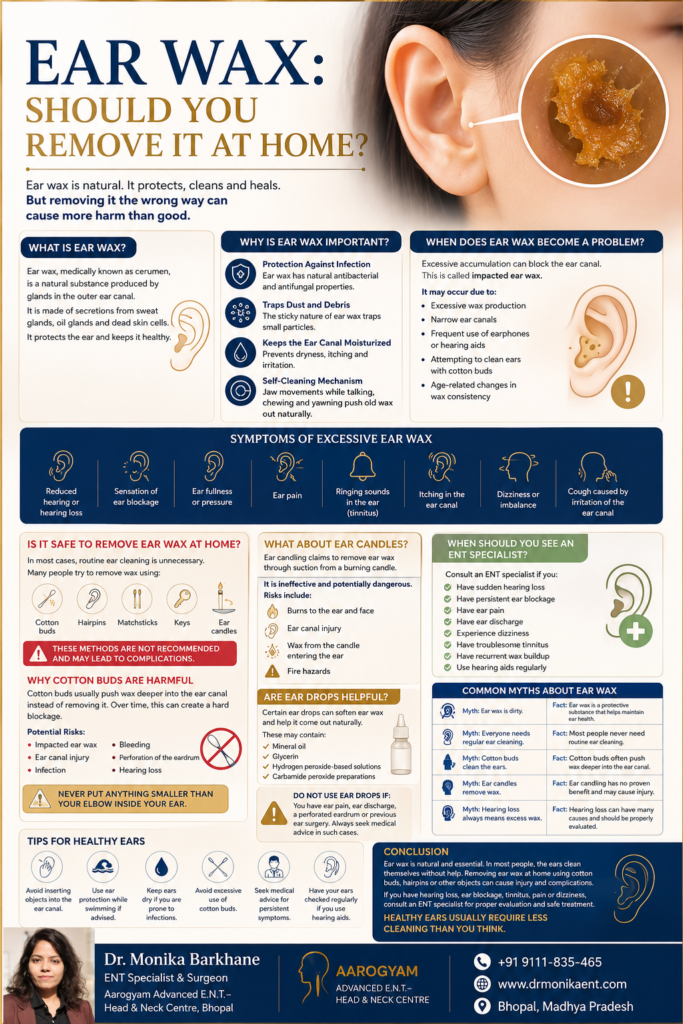
Ear Wax: Should You Remove It at Home?
Ear wax is one of the most misunderstood substances in the human body. Many people believe that ear wax is dirty and should be removed regularly to keep the ears clean. As a result, cotton buds, hairpins, keys, and various home remedies are commonly used to clean the ears. However, these practices can often do more harm than good.
If you have ever wondered whether you should remove ear wax at home, this article will help you understand the role of ear wax, the risks of self-cleaning, and when it is time to consult an ENT specialist.
What Is Ear Wax?
Ear wax, medically known as cerumen, is a natural substance produced by glands in the outer part of the ear canal. It consists of secretions from sweat glands, oil glands, and dead skin cells.
Contrary to popular belief, ear wax is not harmful. In fact, it plays an important role in maintaining ear health. It acts as a protective barrier that prevents dust, dirt, bacteria, fungi, and other foreign particles from reaching the deeper parts of the ear.
Ear wax also helps lubricate the ear canal, preventing dryness and irritation.
Why Is Ear Wax Important?
Ear wax serves several important functions:
1. Protection Against Infection
Ear wax has natural antibacterial and antifungal properties that help reduce the risk of infections.
2. Traps Dust and Debris
The sticky nature of ear wax traps small particles before they can reach the eardrum.
3. Keeps the Ear Canal Moisturized
Without ear wax, the skin inside the ear canal can become dry, itchy, and prone to irritation.
4. Self-Cleaning Mechanism
The ear is designed to clean itself naturally. Movements of the jaw during talking, chewing, and yawning gradually push old wax toward the outer opening of the ear, where it dries and falls out on its own.
When Does Ear Wax Become a Problem?
While ear wax is beneficial, excessive accumulation can sometimes lead to blockage of the ear canal. This condition is known as impacted ear wax.
Impacted ear wax may occur due to:
- Excessive wax production
- Narrow ear canals
- Frequent use of earphones or hearing aids
- Attempting to clean ears with cotton buds
- Age-related changes in wax consistency
When ear wax becomes impacted, it may cause several symptoms.
Symptoms of Excessive Ear Wax
Common symptoms include:
- Reduced hearing or hearing loss
- Sensation of ear blockage
- Ear fullness or pressure
- Ear pain
- Ringing sounds in the ear (tinnitus)
- Itching in the ear canal
- Dizziness or imbalance
- Cough caused by irritation of the ear canal
If you experience any of these symptoms, it is advisable to seek professional evaluation rather than attempting aggressive cleaning at home.
Is It Safe to Remove Ear Wax at Home?
In most cases, routine ear cleaning is unnecessary. The ears usually clean themselves naturally.
However, many people attempt to remove wax using:
- Cotton buds
- Hairpins
- Matchsticks
- Keys
- Ear candles
- Sharp objects
These methods are not recommended and may lead to complications.
Why Cotton Buds Are Harmful
Cotton buds are among the most common causes of impacted ear wax.
Instead of removing wax, cotton buds usually push it deeper into the ear canal. Over time, this can create a hard blockage that becomes difficult to remove.
Potential risks include:
- Impacted ear wax
- Ear canal injury
- Infection
- Bleeding
- Perforation of the eardrum
- Hearing loss
A simple rule to remember is:
Never put anything smaller than your elbow inside your ear.
What About Ear Candles?
Ear candling is a popular alternative remedy that claims to remove ear wax through suction created by a burning candle.
Scientific studies have shown that ear candling is ineffective and potentially dangerous.
Risks include:
- Burns to the ear and face
- Ear canal injury
- Wax from the candle entering the ear
- Fire hazards
ENT specialists strongly discourage the use of ear candles.
Are Ear Drops Helpful?
Certain over-the-counter ear drops may help soften ear wax and facilitate its natural removal.
These may contain:
- Mineral oil
- Glycerin
- Hydrogen peroxide-based solutions
- Carbamide peroxide preparations
However, ear drops should not be used if:
- You have ear pain
- There is ear discharge
- You have a perforated eardrum
- You have undergone previous ear surgery
In such situations, professional medical advice is essential.
When Should You See an ENT Specialist?
You should consult an ENT specialist if:
- Hearing loss develops suddenly
- Ear blockage persists despite ear drops
- There is ear pain
- Ear discharge is present
- You experience dizziness
- Tinnitus becomes troublesome
- Recurrent wax buildup occurs
- You use hearing aids regularly
An ENT examination can determine whether symptoms are truly due to ear wax or another underlying condition.
Common Myths About Ear Wax
Myth 1: Ear Wax Is Dirty
Fact: Ear wax is a protective substance that helps maintain ear health.
Myth 2: Everyone Needs Regular Ear Cleaning
Fact: Most people never need routine ear cleaning.
Myth 3: Cotton Buds Clean the Ears
Fact: Cotton buds often push wax deeper into the ear canal.
Myth 4: Ear Candles Remove Wax
Fact: Ear candling has no proven benefit and may cause injury.
Myth 5: Hearing Loss Always Means Excess Wax
Fact: Hearing loss can have many causes and should be properly evaluated.
Tips for Healthy Ears
To keep your ears healthy:
- Avoid inserting objects into the ear canal.
- Use ear protection while swimming if advised by your doctor.
- Keep ears dry if you are prone to infections.
- Avoid excessive use of cotton buds.
- Seek medical advice for persistent symptoms.
- Have your ears checked regularly if you use hearing aids.
Conclusion
Ear wax is a natural and essential part of ear health. In most people, the ears are capable of cleaning themselves without any assistance. Attempting to remove ear wax at home using cotton buds, hairpins, or other objects often causes more problems than it solves.
If you experience hearing loss, ear blockage, tinnitus, pain, or dizziness, it is best to consult an ENT specialist for proper evaluation and safe wax removal. Professional treatment can quickly relieve symptoms while protecting the delicate structures of the ear.
Remember: healthy ears usually require less cleaning than you think. When in doubt, let an ENT specialist guide you rather than risking injury through home remedies.