Various Methods of Hearing Rehabilitation: Regaining the Joy of Listening
Hearing loss is one of the most common health conditions affecting people of all age groups. It can significantly impact communication, social interactions, education, professional performance, and overall quality of life. Fortunately, modern medicine offers several effective hearing rehabilitation methods that help individuals improve their hearing abilities and regain confidence in daily life.
Hearing rehabilitation is not limited to hearing aids alone. It involves a comprehensive approach that may include assistive devices, communication techniques, listening training, speech therapy, counseling, and preventive measures. Understanding these options can help patients and families make informed decisions about hearing care.
What is Hearing Rehabilitation?
Hearing rehabilitation refers to a range of treatments, technologies, and training methods designed to improve communication and hearing function in individuals with hearing loss. The primary goal is not only to enhance sound perception but also to improve speech understanding, social participation, and overall well-being.
The appropriate rehabilitation method depends on factors such as the degree of hearing loss, age, lifestyle requirements, and individual communication needs.
1. Assistive Listening Devices
Hearing Aids
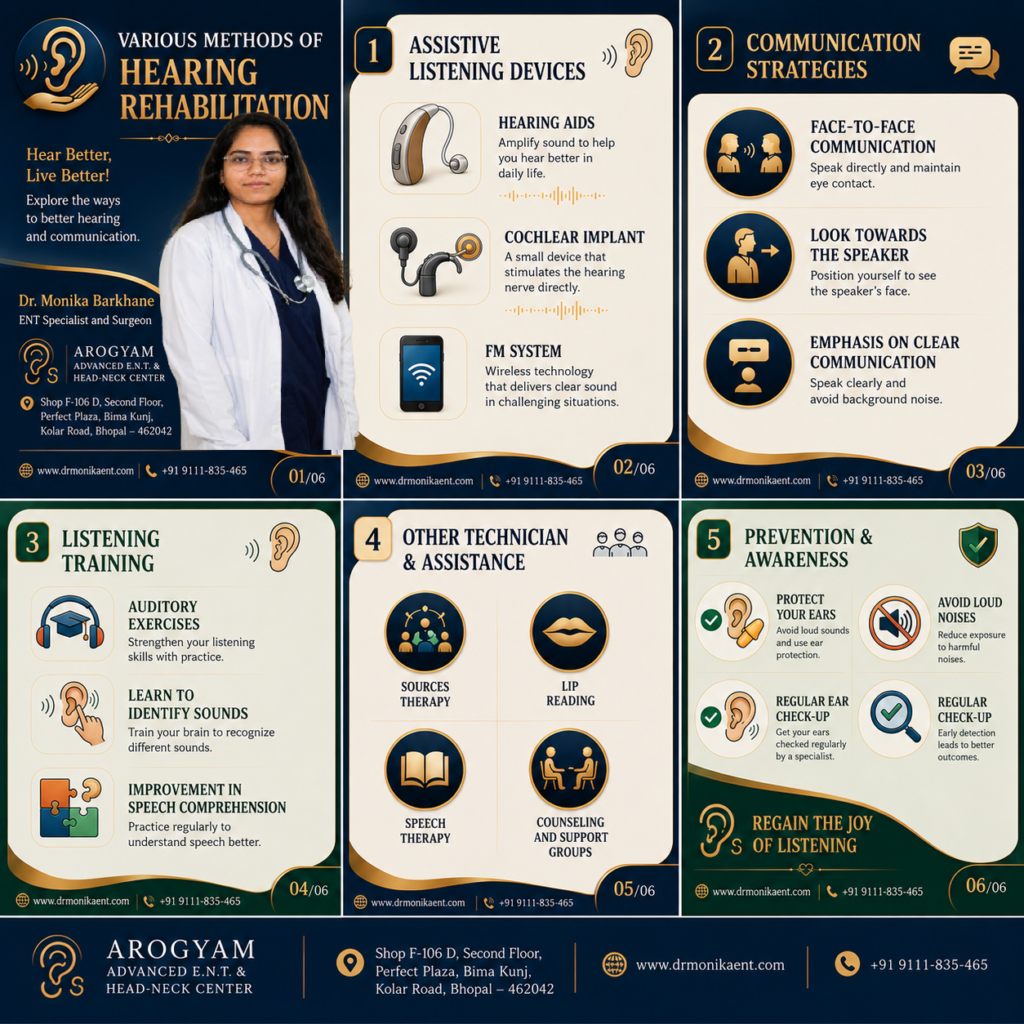
Hearing aids are the most commonly used devices for hearing rehabilitation. These small electronic devices amplify sounds, making them easier to hear and understand. Modern digital hearing aids are sophisticated and can be customized according to the patient’s hearing profile.
Benefits of hearing aids include:
Improved speech understanding
Better communication in daily situations
Reduced listening effort
Enhanced participation in social activities
Improved quality of life
Today’s hearing aids are available in various styles and feature advanced technologies such as noise reduction, directional microphones, Bluetooth connectivity, and rechargeable batteries.
Cochlear Implants
For individuals with severe to profound hearing loss who receive limited benefit from hearing aids, cochlear implants may be an excellent option.
Unlike hearing aids that amplify sound, cochlear implants bypass damaged portions of the inner ear and directly stimulate the auditory nerve. This allows the brain to receive sound signals more effectively.
Cochlear implants can significantly improve speech perception and communication abilities, especially when combined with auditory rehabilitation and regular follow-up care.
FM Systems
FM systems are wireless assistive listening devices that help improve speech understanding in noisy environments.
These systems consist of a microphone worn by the speaker and a receiver used by the listener. The speaker’s voice is transmitted directly to the listener, reducing the effects of background noise and distance.
FM systems are particularly beneficial for:
School-going children
Classroom learning
Business meetings
Public lectures
Group discussions
2. Communication Strategies
Effective communication strategies play a vital role in hearing rehabilitation. Even individuals using hearing aids or cochlear implants benefit greatly from learning better communication techniques.
Face-to-Face Communication
Visual cues such as facial expressions, lip movements, and body language help improve speech understanding.
Maintaining face-to-face communication allows individuals with hearing loss to use both hearing and visual information to comprehend conversations more effectively.
Look Towards the Speaker
Positioning yourself where you can clearly see the speaker’s face significantly improves communication.
Good lighting and reduced background distractions make it easier to understand speech and follow conversations.
Emphasis on Clear Communication
Family members and caregivers can support hearing-impaired individuals by:
Speaking clearly and naturally
Avoiding shouting
Reducing background noise
Ensuring attention before speaking
Using simple and direct language when necessary
These small adjustments can make communication much easier and more effective.
3. Listening Training
Listening training helps the brain learn to interpret sounds more efficiently. This is especially important for individuals who are newly fitted with hearing aids or cochlear implants.
Auditory Exercises
Structured auditory exercises strengthen listening skills and improve the brain’s ability to process sounds.
These exercises may include:
Sound recognition tasks
Speech discrimination exercises
Listening comprehension activities
Environmental sound identification
Learning to Identify Sounds
Patients are trained to recognize different sounds encountered in daily life, such as:
Doorbells
Telephones
Traffic sounds
Household appliances
Voices of family members
Over time, the brain becomes better at distinguishing and interpreting these sounds.
Improving Speech Comprehension
Listening training focuses on improving understanding of spoken language, particularly in challenging listening situations.
Regular practice can lead to:
Better speech recognition
Improved conversation skills
Increased confidence
Enhanced communication abilities
4. Additional Rehabilitation Support
Successful hearing rehabilitation often requires support from multiple professionals and therapies.
Speech Therapy
Speech therapy can be highly beneficial, especially for children with hearing loss and adults adapting to hearing devices.
Speech-language pathologists help improve:
Speech production
Language development
Communication skills
Listening abilities
Lip Reading
Lip reading, also known as speech reading, involves interpreting speech through visual observation of lip movements, facial expressions, and gestures.
Although it does not replace hearing, lip reading provides valuable additional information that enhances communication.
Counseling and Support Groups
Hearing loss can sometimes lead to frustration, anxiety, social withdrawal, and reduced self-confidence.
Counseling helps individuals and families understand hearing loss and develop coping strategies.
Support groups provide opportunities to:
Share experiences
Learn from others
Gain emotional support
Stay motivated during rehabilitation
5. Prevention and Awareness
Prevention remains one of the most important aspects of hearing health.
Protect Your Ears
Exposure to loud sounds can cause permanent hearing damage.
Protective measures include:
Using earplugs in noisy environments
Wearing earmuffs during industrial work
Limiting exposure to loud music
Following safe listening practices
Avoid Loud Noises
Repeated exposure to high noise levels can gradually damage the delicate structures of the inner ear.
It is advisable to:
Keep headphone volume at safe levels
Take listening breaks
Maintain distance from loud speakers
Use hearing protection when required
Regular Ear Check-Ups
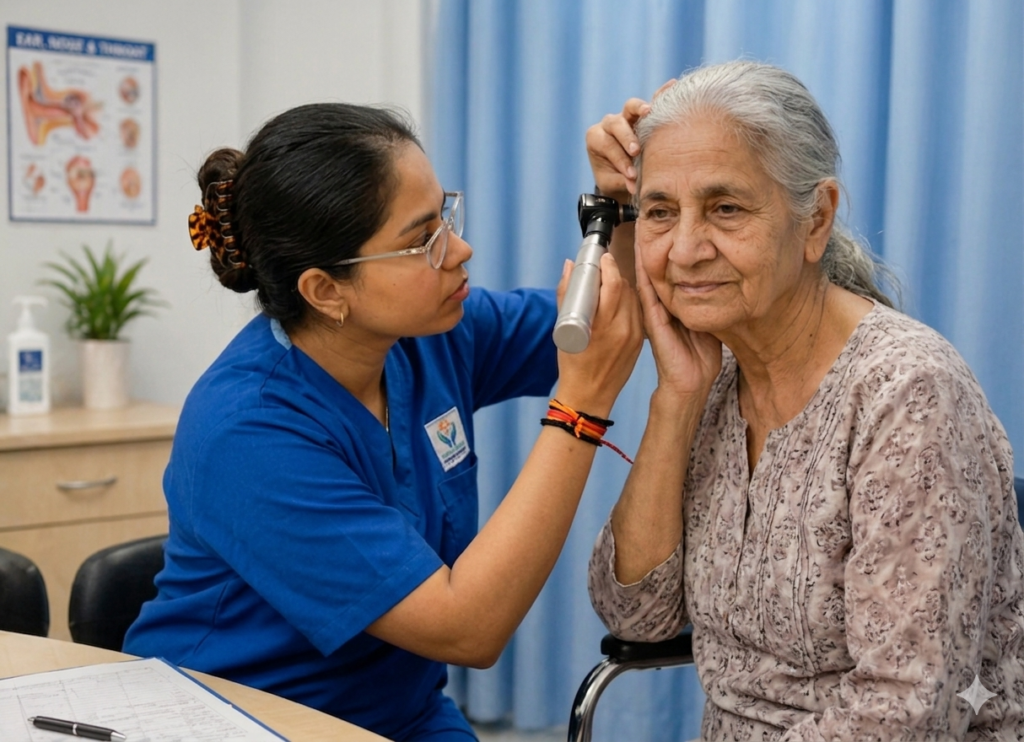
Routine hearing evaluations help detect hearing problems early.
Early diagnosis allows timely intervention and better treatment outcomes. Individuals at higher risk, including older adults, factory workers, musicians, and those with a family history of hearing loss, should undergo periodic hearing assessments.
Conclusion
Hearing loss does not have to limit your ability to communicate and enjoy life. Modern hearing rehabilitation offers a wide range of solutions, from hearing aids and cochlear implants to listening training, speech therapy, and communication strategies.
The key to successful rehabilitation is early diagnosis, appropriate treatment, and consistent follow-up care. With the right combination of technology, training, and support, individuals with hearing loss can significantly improve their communication abilities and quality of life.
If you or a loved one is experiencing hearing difficulties, consult an ENT specialist for a comprehensive hearing evaluation and personalized rehabilitation plan.
disclaimer : This blog is for educational purposes only and does not replace professional medical advice. Always consult a qualified healthcare provider for diagnosis and treatment.